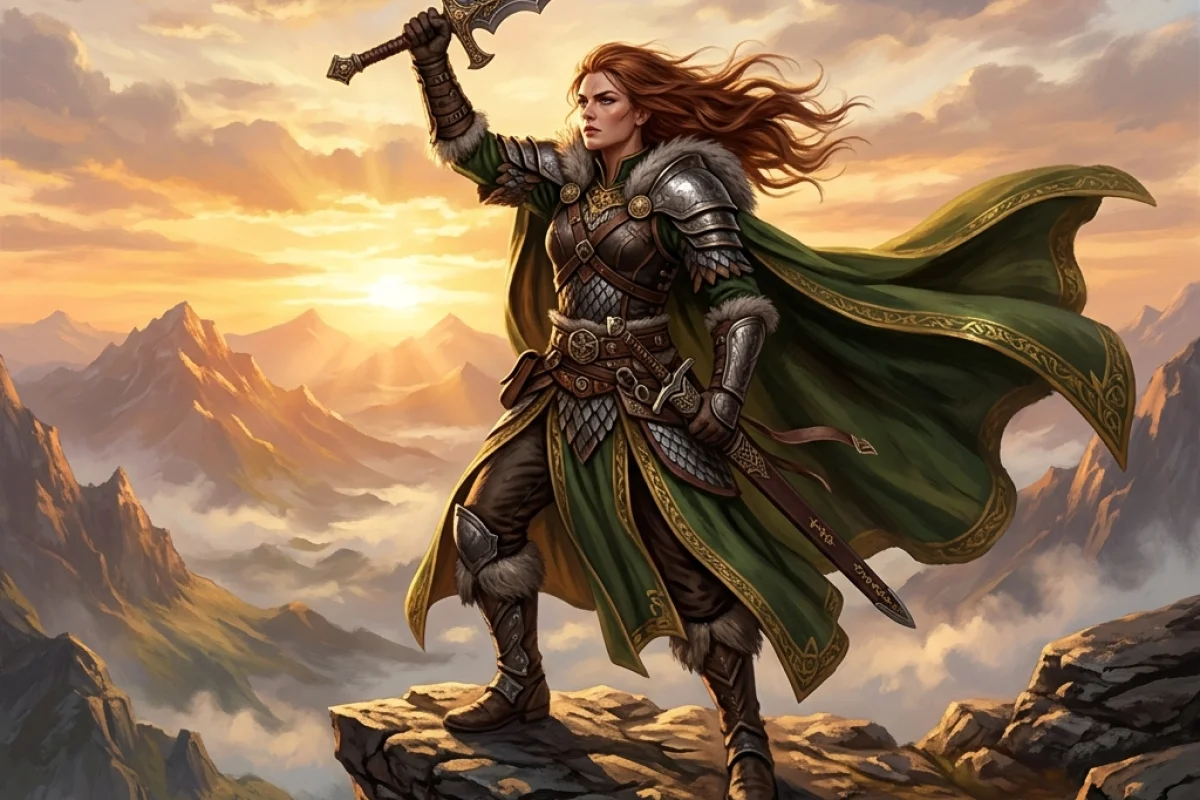
Let’s talk about something that makes a certain subset of readers deeply uncomfortable: romantasy heroines who refuse to be nice.
Not mean for the sake of mean. Not villains. Just women who look at the expectation of constant self-sacrifice and say, “Actually, no. I’m going to choose MYSELF today.” And somehow, in the year of our lord 2025, that’s still controversial.
Wild, right?
The Selflessness Trap (And Why It’s Garbage)
Here’s the thing — for CENTURIES, the “good” female character in literature had one job: sacrifice. Give up her dreams, her body, her literal life so everyone else could thrive. And we were supposed to find that beautiful. Inspiring, even. Noble.
Think about it. How many classic heroines do you know whose entire arc is “she gave everything away and then she died, and wasn’t that lovely?” TOO MANY. The bar for female protagonists was buried six feet underground, and we were told to be grateful for the view. A woman who wanted things — power, autonomy, pleasure, revenge — was either the villain or the cautionary tale. Never the hero.
And look, I love a good tragic heroine as much as the next person with dark-leaning taste. But there’s a difference between a character who CHOOSES sacrifice and one who’s narratively punished for daring to exist on her own terms. The first is compelling. The second is propaganda dressed up in a corset.
Romantasy said no to that. The genre’s explosion in recent years brought us heroines who want things — power, pleasure, revenge, love, sometimes ALL AT ONCE — and pursue those things without apologizing. And readers showed up in absolute droves because finally, FINALLY, someone was writing women the way women actually think. Not as saints. Not as symbols. As people with appetites.
Selfishness Is Just Self-Possession With Bad PR
Let’s redefine terms here, because I think we’ve been using “selfish” wrong when it comes to great romantasy heroines. And this distinction matters more than you’d think.
When Jude Duarte schemes her way to the throne in The Cruel Prince, that’s not selfishness — that’s a mortal girl in a world that wants her dead deciding she DESERVES to exist. She’s not taking from anyone. She’s refusing to be taken from. When Nesta Archeron rages and drinks and refuses to perform gratitude for a life she didn’t ask for, that’s not selfishness — that’s grief wearing armor, and honestly? It’s one of the most realistic depictions of trauma I’ve ever read in fantasy. When Feyre goes Under the Mountain in A Court of Thorns and Roses, she’s not doing it purely for Tamlin — she’s doing it because SHE needs to know she can survive it.
These women aren’t selfish. They’re self-possessed. They know what they want, they know what they’re worth, and they refuse to shrink so other people can feel comfortable. The difference between “selfish” and “self-possessed” is just who’s doing the labeling — and usually, it’s someone who benefits from the heroine staying small.
Sound familiar? Yeah. It should.
The Love Interest as Mirror, Not Reward
Here’s where romantasy does something BRILLIANT that pure fantasy often misses. The morally grey love interest doesn’t exist to reward the heroine for being good. He doesn’t show up as a prize for suffering prettily. He exists to reflect back what she already is — and to want her MORE for it, not less.
Cardan doesn’t soften Jude. Cassian doesn’t fix Nesta. Rhysand doesn’t save Feyre (okay, he literally does once, but you know what I mean — he doesn’t save her from HERSELF). These love interests look at their heroines — sharp edges, dark impulses, inconvenient ambitions and all — and say, “Yes. ALL of that. More of that. Show me the worst of you and I’ll still be here in the morning.”
That’s not romance as domestication. That’s romance as amplification. The slow burn works BECAUSE neither person is asking the other to be less. The tension comes from two people who are both too much, circling each other like binary stars until they stop pretending they don’t want to collide. It’s intoxicating to read because it’s the opposite of every story that told us love means making yourself smaller.
And THAT is why even non-romance readers get pulled into these stories. It’s not about the kissing (though the kissing is excellent, let’s be honest). It’s about watching someone be fully, terrifyingly seen — and choosing to stay visible anyway. That’s the real fantasy.
For the Writers in the Back
If you’re writing romantasy — and I know some of you are, don’t be shy — here’s your assignment: Stop punishing your heroine for wanting things.
Seriously. Let her be ambitious without a tragic backstory justifying it. Let her be angry without a redemption arc that looks suspiciously like an apology tour. Let her choose the morally grey love interest without the narrative framing it as a mistake she’ll eventually learn from. Let her be DIFFICULT. Let her be inconvenient. Let her take up space in the story the way male protagonists have always been allowed to.
Your heroine can want the throne AND the guy. She can burn down the corrupt court AND look incredible doing it. She can be the chosen one who didn’t ask for it and STILL decide she’s keeping the power, thanks very much.
The best romantasy doesn’t ask heroines to earn their desires through suffering. It asks: what happens when a woman stops apologizing and starts TAKING? That’s where the story gets interesting. That’s where the magic systems and the dragons and destiny become more than set dressing — they become the landscape of her ambition. The world isn’t just a backdrop. It’s the thing she’s going to conquer.
Why This Matters (Beyond the Page)
Look, I’m not going to pretend that reading about Nesta Archeron throwing furniture is going to single-handedly dismantle the patriarchy. But I WILL say this: representation of female desire — for power, for pleasure, for self-determination — matters more than we give it credit for.
Every time a reader picks up a book like ACOTAR and sees a heroine choose herself without being punished for it, something shifts. Not dramatically. Not overnight. But the quiet, persistent message of “you are allowed to want things, and wanting them doesn’t make you bad” lands differently when you’ve spent 400 pages watching someone LIVE it. When you’ve felt that rush of recognition — “oh, she’s angry the way I’M angry” — and the book didn’t punish her for it? That stays with you.
Romantasy heroines are allowed to be selfish because selfishness, in this context, is just another word for freedom. And freedom looks REALLY good on them.
So the next time someone tells you your favorite heroine is “too selfish” or “unlikeable” or “not a good role model” — remember that those complaints have never, not ONCE, been leveled at male protagonists who do the exact same things. Funny how that works. Almost like the problem was never selfishness at all. Almost like the problem was always a woman who refused to be convenient.
Now if you’ll excuse me, I have a stack of books featuring women who refuse to be convenient, and I intend to enjoy every single unrepentant page.
Which ‘selfish’ heroine do you defend with your WHOLE chest? Tell me in the comments. I will fight alongside you. 🖤
Further Reading
- The Heroine We Deserve: Reclaiming the Protagonist in Fantasy
- The Chosen One Who Doesn’t Want It
- Morally Grey Love Interest Fantasy Books
Enjoyed this essay?
Vellichor is free for everyone. If this essay was worth your time, consider supporting us.
Author

Enjoying this?
Vellichor is free and ad-free. If you enjoy our essays, consider supporting us with a one-time contribution.
Support Vellichor →