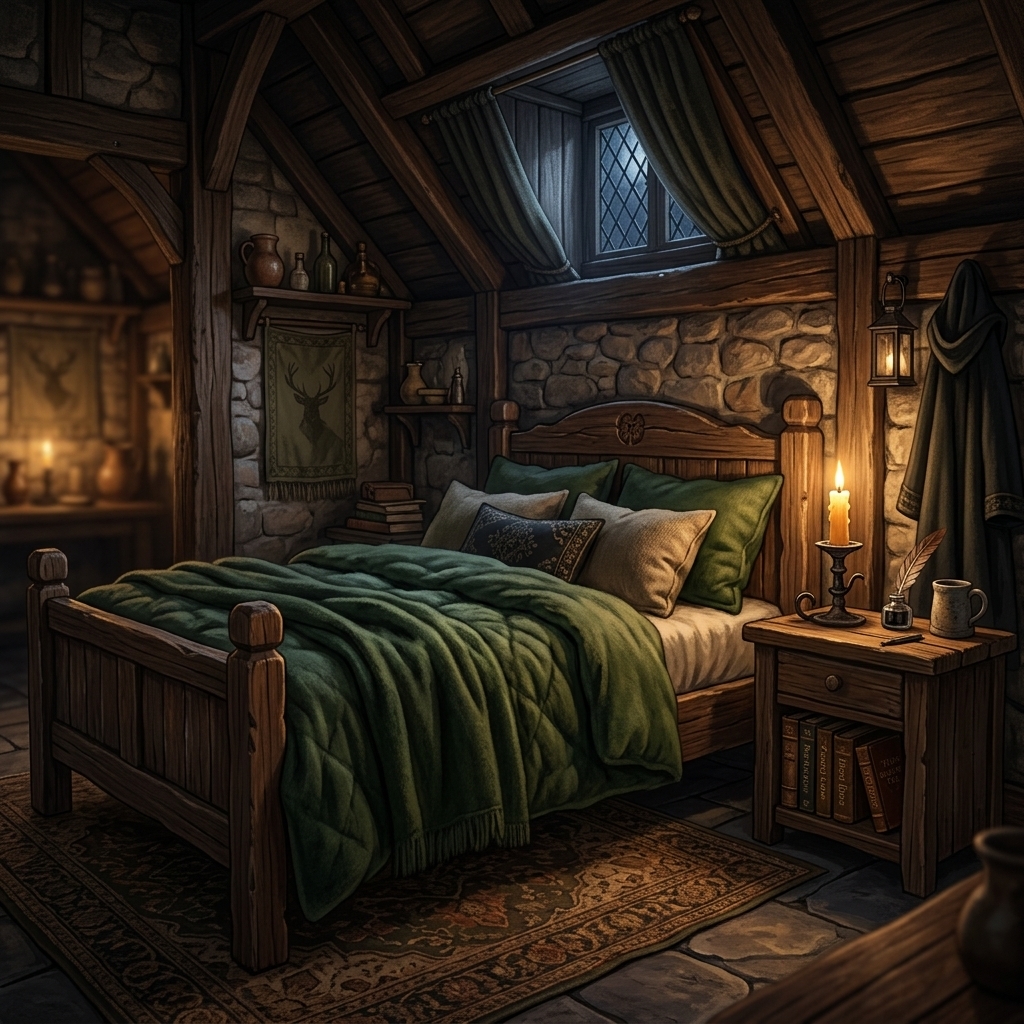
Picture this: It is 2:45 AM. You are wrapped in a blanket like a disgruntled burrito, your eyes are bloodshot, and your phone has been pleading for a charger for the last forty minutes. You know—rationally, logically, responsibly—that you should close your book and go to sleep. But the main characters have just been caught in a sudden, violent blizzard, their horses are exhausted, and they’ve been forced to seek shelter at the only run-down tavern for miles. They walk up to the counter, the gruff innkeeper shrugs, and utters the five most satisfying words in the entire English language: “We only have one bed.”
Instantly, your sleep schedule is ruined. Your heart rate spikes, your brain floods with dopamine, and you brace yourself for the absolute masterclass in romantic torture that is about to unfold. Welcome, my fellow romantasy addicts, to the glorious, agonizing world of the “only one bed” trope.
As your resident bookish best friend who spends way too much time obsessing over fictional relationships, I am here to tell you that forced proximity is the crown jewel of romance writing. And while we all have our favorite setups in the romantasy tropes ranked list, the single-mattress dilemma is the one that consistently has us clutching our chests at 3 AM. But why does this specific scenario work so well? Why does the prospect of two characters sharing a mattress deliver more emotional payoff than a full-blown, multi-chapter spice scene? Let’s dissect the anatomy of this perfect literary torture.
The Psychology of the Single Mattress: Proximity vs. Choice
At its core, the power of “there’s only one bed” lies in the deletion of choice. In a standard fantasy romance, the characters are constantly building walls. They are hiding behind political alliances, military duties, or the sheer terror of their own feelings. Especially when we are dealing with a classic forbidden love in romantasy, the characters have spent hundreds of pages convincing themselves (and each other) that they must keep their distance. They choose to stand apart. They choose to look away.
But when the universe decides to trap them in a small room with a single bed, choice is stripped away. The physical distance that they have spent chapters carefully maintaining is suddenly reduced to zero. They are forced into a space where they cannot escape the reality of the other person’s presence. They can hear every breath, feel every shift in temperature, and see every raw, unguarded emotion that is usually hidden behind shields of ice and steel.
This is the ultimate engine for a delicious slow burn romance. It’s not about the physical act of sharing a bed; it’s about the mental exhaustion of trying *not* to touch. The tension isn’t built on what they do, but on the agonizing restraint of what they *cannot* do. Every inch of space between them becomes electric, and every shift in the blankets feels like a high-stakes negotiation.
The Anatomy of the Scene: A Masterclass in Tension
A truly unforgettable “only one bed” scene is a three-act play of emotional destruction. It requires careful pacing, sharp dialogue, and a heavy dose of stubbornness. If you’ve spent any time on the dedicated Only One Bed shelf on Goodreads, you know the absolute best scenes follow a specific, delicious trajectory:
Stage 1: The Ridiculous Negotiation
It always begins with denial. The characters refuse to accept the reality of their situation. We get the classic, stubborn arguments: “I will sleep on the floor.” “The floor is stone and it’s freezing, don’t be an idiot.” “I’d rather freeze than sleep next to you.” Eventually, logic (or cold weather) wins. They agree to share, but they must establish strict, aggressive boundaries. They agree to stay on their respective sides, establishing an invisible (or literal, pillow-constructed) wall of defense. This stage is pure comedy and delicious denial.
Stage 2: The Hyper-Awareness of Darkness
Once the candles are blown out, the comedy evaporates, replaced by suffocating tension. The room is pitch black, and all they have is their senses. This is where the writing gets incredibly intimate. The characters lie perfectly still, barely breathing, terrified that any movement will be interpreted as an invitation or a surrender. Every sigh, every brush of fabric, and the steady heat radiating from the other side of the mattress becomes an overwhelming distraction. It is the peak of psychological torment, and we love every single second of it.
Stage 3: The Cold-Night Collapse
The climax of the trope occurs when the carefully constructed boundaries inevitably collapse in the middle of the night. It usually involves a drop in temperature, a nightmare, or one character needing to tend to the other’s injuries. When one character wakes up to find the other shivering and sub-consciously pulling them close, the walls are gone. It’s the moment where the protective instinct overrides the fear of vulnerability. Often, this leads into other beloved tropes, like the quiet, whispered anatomy of a “Who did this to you?” moment. By the time morning comes, the emotional landscape of their relationship has permanently shifted.
Three Romantasy Books That Own This Trope
If you need to wreck your sleep schedule and experience the absolute peak of this tension, these three fantasy romances deserve a permanent spot on your nightstand:
1. A Court of Mist and Fury by Sarah J. Maas
We cannot talk about this trope without paying homage to the absolute queen of romantasy. The inn scene in the Mortal Realm between Feyre and Rhysand is the gold standard. When Rhysand—our favorite morally grey Shadow Daddy—is forced to share a tiny, drafty room with Feyre, the tension is so thick you could cut it with a fae blade. The banter, the vulnerability, and the painting on the drawer make this scene an unforgettable turning point in their slow-burn dynamic.
2. The Bridge Kingdom by Danielle L. Jensen
Danielle L. Jensen is a master of high-stakes, enemies-to-lovers romance, and she utilizes forced proximity beautifully. Stranded on a storm-swept bridge, Lara and Aren are forced into close quarters where their mutual suspicion and intense attraction collide. Sharing a cramped, cold space forces them to see the humanity in each other, chipping away at the layers of lies and political brainwashing that have kept them apart.
3. A Deal with the Elf King by Elise Kova
For readers who love their romantasy with a side of cozy, fairy-tale magic, this standalone novel delivers the goods. Luella and the Elf King, Eldas, have a relationship built on duty and cold expectations. But when they are forced to share quarters, the formal barriers begin to crumble. The forced proximity of their living arrangements turns a cold marriage of convenience into a warm, deeply emotional partnership.
Why Fictional Torture is Our Ultimate Comfort
Let’s be real: in the actual, non-fictional world, being forced to share a bed with someone you actively dislike or distrust is not a romance—it is an awkward, stressful nightmare. But in the safe, structured sanctuary of a fantasy novel, it represents the ultimate comfort. Why?
Because the “only one bed” trope is a physical manifestation of emotional vulnerability. It forces characters who are constantly fighting, running, or protecting themselves to finally stop. It places them in a position of rest and forces them to face the truth of their connection. It’s a reminder that sometimes, the only way to break down our emotional walls is to be placed in a situation where we have no choice but to let someone else in.
It also gives us a break from the high-stakes violence of the fantasy world. In between dodging death curses, fighting rebel wars, and managing kingdom politics, the characters (and the readers) get a quiet, self-contained bubble where the only conflict is a shared blanket. It is intimate, low-stakes, and deeply humanizing.
Join the Book Club
Alright, my beautiful bookish friends, it’s your turn to chime in. Where does the “only one bed” trope rank for you? Are you obsessed with the reluctant cuddle, or do you prefer the high-tension banter of the negotiation phase? What is the absolute best scene you’ve ever read? (No judgment here—we are all feral for these tropes!)
Drop your favorite books and recommendations in the comments below! Let’s ruin each other’s TBR piles together. And if you want to chat more about our favorite morally grey heroes, make sure to join our Discord buddy read channel—we are starting our next read-along this Friday, and we need all the emotional support we can get!
Author

Enjoying this?
Vellichor members get early access to new essays, monthly reading picks, and craft workshops. From $3.99/mo — no sponsored content, ever.
See membership plans →