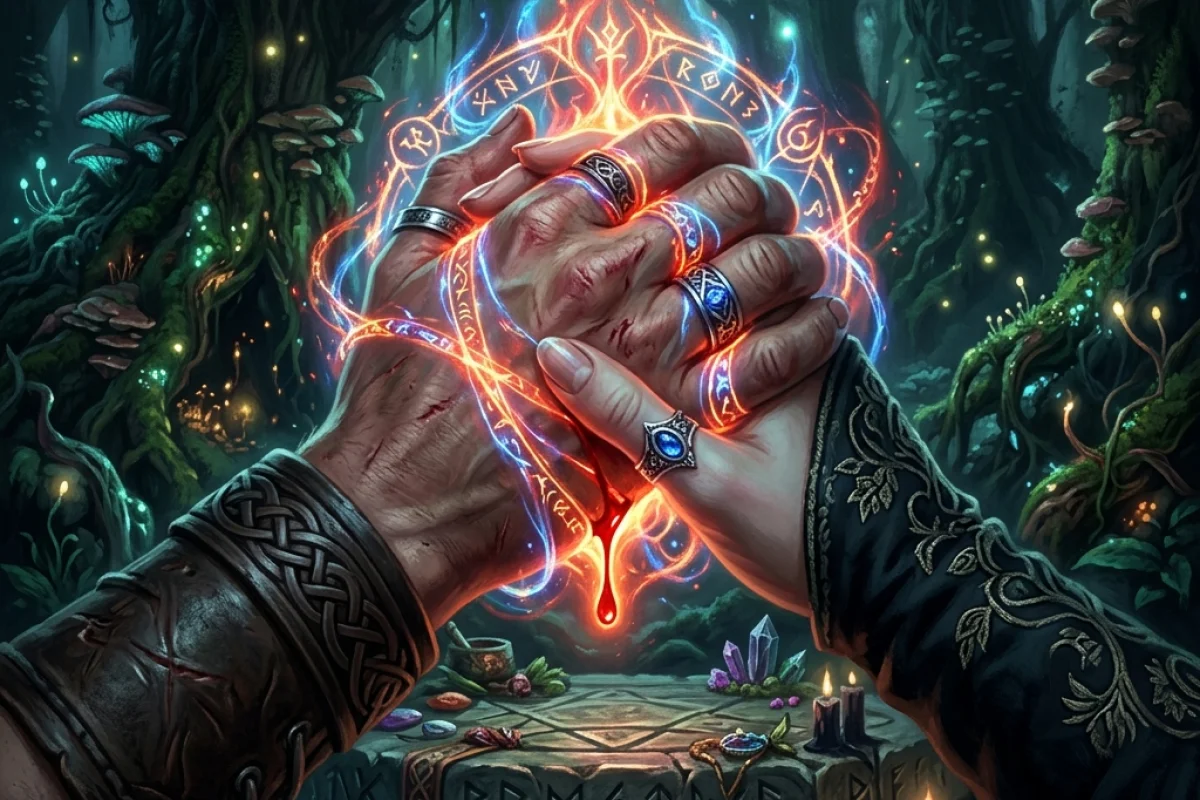
Okay, let’s talk about the single most unhinged moment in romantasy. It’s not the first kiss. It’s not the love confession under moonlight. It’s not even the big battle. It’s the moment two characters look each other dead in the eye and bind themselves together through something OLDER and DARKER and more dangerous than love—a blood oath, a fae bargain, a magical contract that will literally destroy them if they break it.
And you, dear reader? You absolutely LOSE it every single time. I know because I do too.
I’ve been thinking about why this hits so differently. Why readers who couldn’t care less about a standard “I love you” will throw their Kindle across the room over a binding scene. Why this trope keeps showing up in every major romantasy series. And honestly? The answer is kind of devastating.
The Mechanics (A.K.A. Why It’s So Brutal)
Binding magic comes in a few flavors, but they all share one terrifying feature: the agreement is enforced by something that does NOT care about your feelings. The magic itself is the enforcer. Break the oath? The magic breaks YOU. It kills you, strips your power, marks your soul permanently. No take-backs. No “I changed my mind.” Done.
Blood oaths are the visceral version. Blood drawn, words spoken, bond written into your actual biology. It’s intimate in a way that completely bypasses normal romantic choreography. You don’t need candlelight and wine when you’re literally mingling your life force over a drawn dagger. That IS the romance.
Fae bargains are the cerebral, treacherous cousin. The fae can’t lie, their bargains are absolute, and when a fae lord makes a deal with a mortal in fantasy romance? The power imbalance is STAGGERING. The human is bound by ancient magic they barely understand, to an immortal predator who understands it completely. Instant tension. Instant obsession (mine, specifically).
Mating bonds—yes, we’re going there—are the most romanticized version precisely because they’re involuntary. The magic CHOOSES. The characters don’t sit down with a pros-and-cons list. They discover, often with genuine horror, that they’re already bound. This either makes you swoon or makes you deeply uncomfortable, and honestly? The best authors make you feel BOTH at the same time.
Why This Hits Harder Than “I Love You”
Here’s the uncomfortable truth: binding magic works because it solves the problem of doubt.
Love in real life is TERRIFYING. You can love someone desperately and still lose them. You can be loved and not believe it. You can choose someone and have them wake up one morning and unchoose you. The vulnerability of love is that it’s never guaranteed. It requires constant renewal, constant choice, constant risk.
Binding magic says: nope. This is permanent. When Rhysand and Feyre are mates, that bond isn’t a fragile feeling—it’s a law of the universe. When characters swear blood oaths, the oath isn’t a flimsy promise—it’s physical reality. The magic makes love PERMANENT in a way human emotion simply can’t.
This is fantasy at its most literal: the fantasy of a love that CANNOT be taken away. And it resonates because the fear it addresses—being abandoned, being unchoosen, loving someone who will eventually leave—is one of the deepest terrors we carry around.
The Ethics (Where It Gets Spicy)
The best romantasy writers know they’re playing with fire here. A binding that removes choice isn’t straightforwardly romantic—it’s borderline coercive. The mating bond in Sarah J. Maas’s work is explicitly something that can be rejected. The magic proposes; the characters still have to CHOOSE it, even after the universe has declared they belong together.
Fae bargains are even messier. When a fae lord offers a desperate, bleeding-out human a deal, the power differential is obscene. The terms are never as simple as they seem. The best bargain stories—and they’re the backbone of the genre—use this imbalance to dig into consent, agency, and what it actually means to surrender yourself to something you don’t fully understand.
Look at Jude and Cardan. Their entire relationship is built on bargains, betrayals, and fallout. Each agreement violently shifts the power dynamic. Their love story is, at its dark core, two deeply paranoid people learning to make agreements that are actually FAIR—which, if you strip away the magic, is exactly what all successful relationships are. (I said what I said.)
Your Assignment: The Cost of the Vow
If you write binding magic, here’s what you need to understand: the magic is secondary. The real power is in what the character is willing to SACRIFICE to make the bond permanent.
The constraint: Write a 300-word scene where two characters enter a magical bargain or blood oath. The catch? The magic demands specific, painful collateral. To seal the bond, the protagonist must permanently give up a memory, a physical sense, or a deeply held belief. Show us the moment they weigh the cost against their need for the bond. Show us them paying the price.
Show us what permanence costs. Drop your scenes in the comments.
What the Bind Actually Reveals
Here’s the thing I find more interesting than the explosive magic itself: that breathless second BEFORE the knife cuts. Before the hands clasp. When the character has to decide whether to cross the threshold.
That’s the moment of maximum vulnerability. It’s when they have to admit—to themselves and to the terrifying creature standing across from them—that they want this enough to make it permanent. They want it enough to risk their soul.
The bind isn’t the romantic moment. The DECISION to bind is. The willingness to look at another person and say: I want this to be real. I want this to be irrevocable. I’m willing to let the universe hold me accountable if I fail.
That’s what this trope is really about. Not magic. Not blood. Not permanence. It’s about the sheer, reckless courage required to want something enough to make it forever.
And THAT is why you scream every time.
More to devour: The Morally Grey Villain · Magic as Metaphor · Dark Fae Romance Books · Forbidden Love in Romantasy
External resource: Tor.com: Blood Oaths and Binding Magic
📚 Recommended reads mentioned in this post:
Affiliate links — we may earn a small commission at no extra cost to you.
These binding mechanisms often serve another purpose too: forging found families — groups bound not by blood but by choice, loyalty, and shared survival.
Enjoyed this essay?
Vellichor is free for everyone. If this essay was worth your time, consider supporting us.
Author

Enjoying this?
Vellichor is free and ad-free. If you enjoy our essays, consider supporting us with a one-time contribution.
Support Vellichor →