Look, if you’ve ever stayed up until 3 AM because a fictional dragon rider was about to confess their feelings, this essay is for you. We need to talk about the THREE ingredients that make romantasy absolutely unputdownable — and why, when they collide, your TBR doesn’t stand a chance.
The Dragon: Power You Can Ride (Literally)
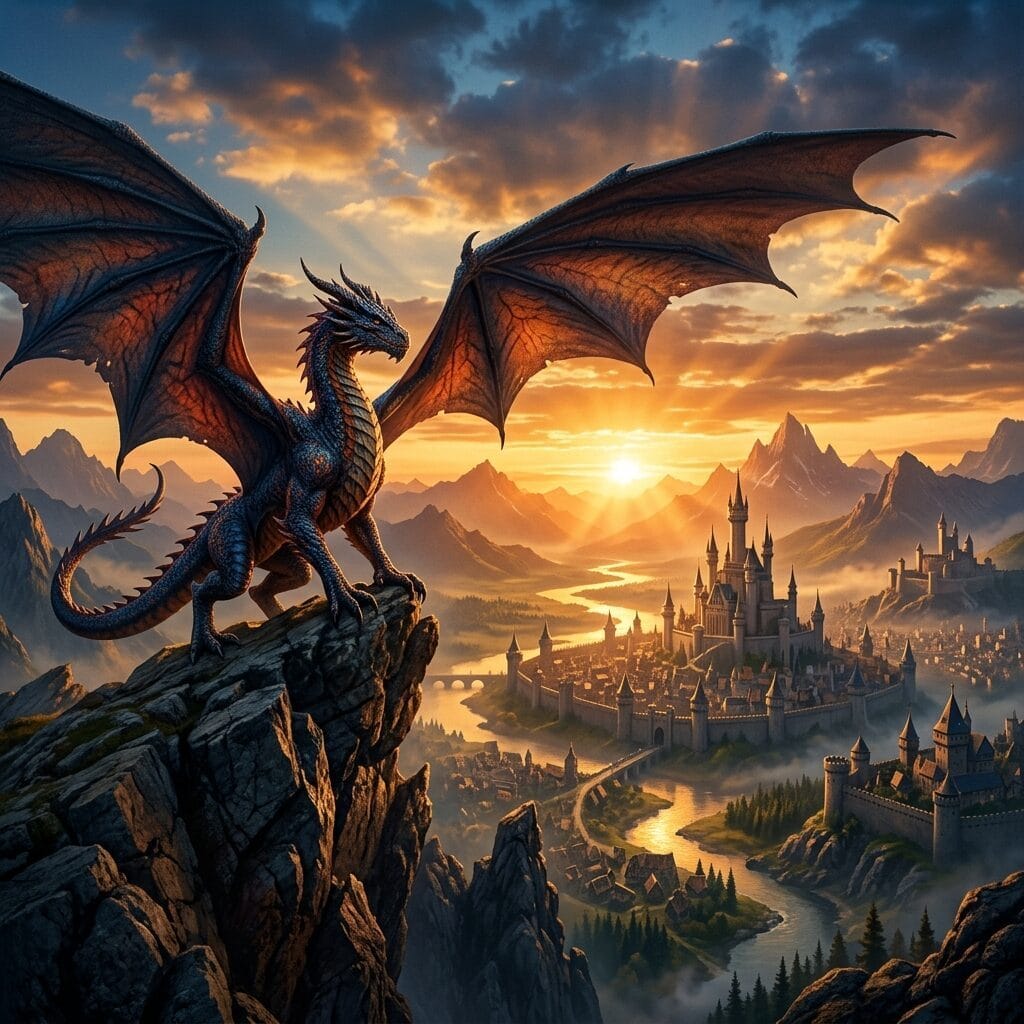
Dragons in romantasy aren’t just cool set dressing. They’re power made FLESH — scaled, fire-breathing, terrifyingly beautiful power. And here’s the thing: the dragon almost always mirrors something about the protagonist. Their untamed side. Their potential. The part of them that refuses to be small.
Anne McCaffrey understood this decades ago with Pern. The bond between rider and dragon wasn’t just telepathy — it was identity. You ARE different after a dragon chooses you. Rebecca Yarros took that concept and cranked it to eleven in the Empyrean series. Tairn doesn’t just give Violet power — he forces her to confront who she actually is versus who everyone TOLD her she was.
The dragon is the great equalizer. It doesn’t care about your bloodline or your social standing. It cares about your SOUL. And honestly? That’s the most romantic thing in the entire genre. (Yes, more romantic than the love interest. I said what I said.)
For more on how elemental powers mirror character growth, that’s a whole other rabbit hole worth falling into.
The Prophecy: Fate as Foreplay
Okay, hear me out. Prophecies in romantasy function EXACTLY like the “there was only one bed” trope — but on a cosmic scale. The universe itself is saying “these two? Yeah, they HAVE to be in the same room together. Repeatedly. Under high-stakes circumstances. You’re welcome.”
Destiny removes the question of WHETHER two characters will collide and replaces it with HOW. And that shift? That’s where all the delicious tension lives. You know they’re fated. They might even know they’re fated. But knowing doesn’t make it easier — it makes it WORSE. Because now every interaction is loaded with inevitability, and they’re both fighting it like absolute idiots, and you’re screaming at your book like it can hear you.
The prophecy also raises the stakes for the romance itself. If fate brought you together, can you trust your own feelings? Is this love or cosmic obligation? That tension between free will and destiny gives romantasy its philosophical backbone — even when you’re mostly just here for the kissing. (No judgment. Same.)
This is also why morally grey villains work so well in these stories — fate doesn’t care about your moral alignment, and THAT is chaotic perfection.
Desire: The Slow Burn That Wrecks You
Here’s where we get to the good stuff. Desire in romantasy isn’t just attraction — it’s attraction COMPLICATED by everything else happening. There’s a war. There’s a prophecy. There’s a dragon that can literally smell your emotions. The obstacles aren’t just “we come from different worlds” — they’re “if we give in to this, kingdoms might fall.”
And the slow burn? The SLOW BURN. Romantasy has perfected the art of making you wait 400 pages for characters to acknowledge what was obvious on page 12. Sarah J. Maas built an empire on this — the ACOTAR series is basically a masterclass in “just TALK to each other” frustration wrapped in gorgeous world-building. (Check out our full ACOTAR review if you want to relive the pain.)
The best romantasy desire isn’t just physical. It’s the desire to be KNOWN. To be seen fully — powers, flaws, prophecy baggage, dragon bond and all — and chosen anyway. That’s the real fantasy here, friends.
The Alchemy: When the Trinity Collides
So what happens when you put all three in a blender? MAGIC. Not the spell-casting kind (though also that). The narrative kind.
The dragon gives your protagonist power they didn’t ask for. The prophecy tells them that power comes with a person attached. And desire makes them resent, resist, and ultimately surrender to the connection. Each element amplifies the others. The dragon bond intensifies desire. The prophecy makes the desire feel inevitable. The desire makes the dragon bond feel personal rather than political.
This is why books with strong magic systems tend to have the most satisfying romances — the power isn’t separate from the love story. It IS the love story.
Your Assignment: Embrace the Inevitable
If you haven’t experienced this trinity in action, you’re genuinely missing out. Start with Fourth Wing if you want dragons-meet-enemies-to-lovers at a military academy. Go with ACOTAR if you prefer your fate wrapped in faerie politics and emotional devastation. Either way, clear your schedule. You WILL lose sleep.
And if you’re already deep in the romantasy trenches? Tell me your favourite dragon-prophecy-desire combo. I’m always looking for my next 3 AM mistake.
For more dragon-centric recommendations, check out Goodreads’ Best Dragon Books list — it’s dangerously comprehensive.
Affiliate disclosure: Some links in this post are affiliate links. If you purchase through them, we earn a small commission at no extra cost to you. We only recommend books we genuinely love.
See Also & Further Reading
- Magic as Metaphor: Elemental Powers and Character Growth
- Shadows and Starlight: The Allure of the Morally Grey Villain
- The Heart of the Realm: World-Building as an Emotional Mirror
Related: Best Romantasy Books of All Time
Enjoyed this essay?
Vellichor is free for everyone. If this essay was worth your time, consider supporting us.
Author

Enjoying this?
Vellichor is free and ad-free. If you enjoy our essays, consider supporting us with a one-time contribution.
Support Vellichor →