The Structural Difference (It’s About Load-Bearing Romance)
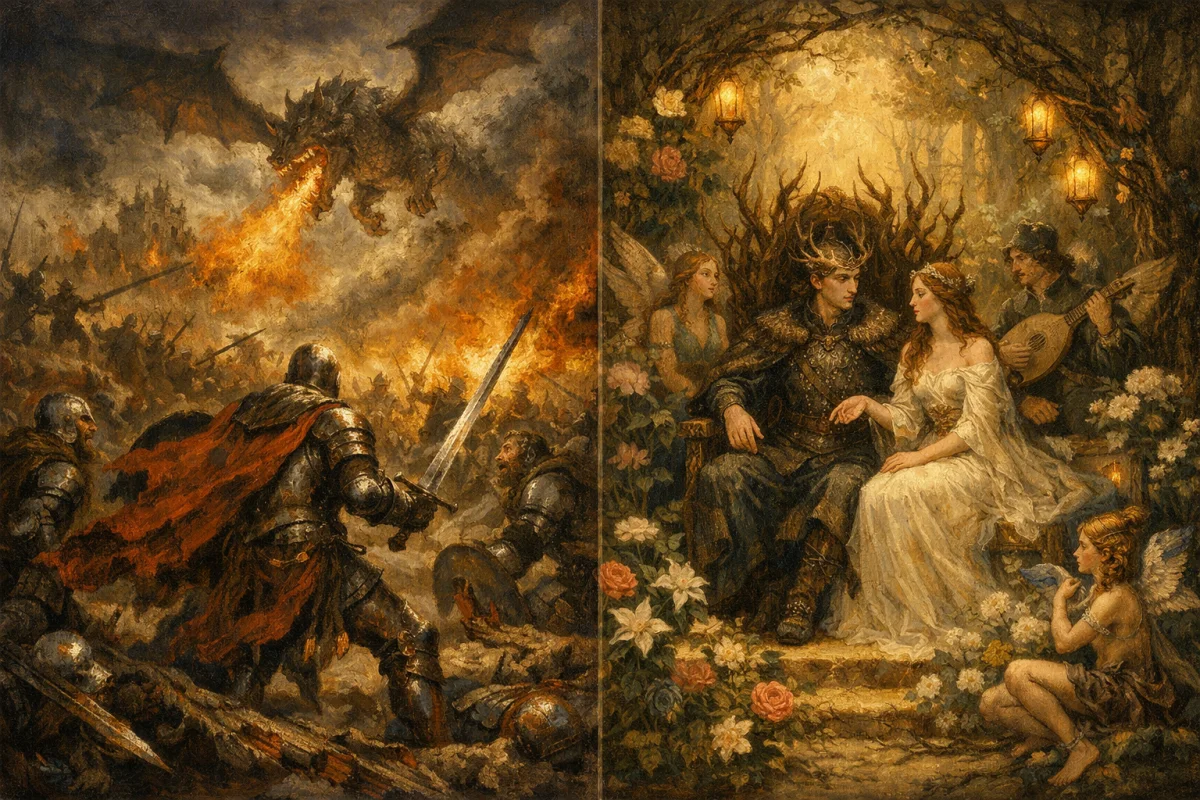
Here’s the real test: if you ripped the romance out of the story, would the plot still stand? In epic fantasy, yes. The quest continues, the war rages on, the magic system keeps doing its thing. Romance is a subplot — nice to have, not structurally necessary. Think Tolkien, Sanderson, the heavy hitters over at Tor. You could delete every romantic subplot from The Stormlight Archive and the Cosmere would keep spinning. In romantasy, absolutely not. The romance IS the load-bearing wall. Remove it and the whole narrative collapses like a house of cards in a windstorm. The relationship arc drives character motivation, plot escalation, and emotional payoff. If you want to write a slow burn that actually works, you need to understand this distinction at a bone-deep level.What Epic Fantasy Does Better
I’ll give credit where it’s due. Epic fantasy excels at:- Worldbuilding depth — entire languages, political systems, magic with RULES and consequences
- Ensemble casts — you get fifteen POVs and you WILL care about all of them (or at least twelve)
- Scope — wars, prophecies, the fate of civilizations hanging in the balance
- Thematic weight — good vs. evil, power and corruption, legacy and sacrifice
What Romantasy Does Better
But romantasy? Romantasy hits different because it nails:- Emotional intimacy — you’re IN that character’s chest cavity, feeling everything they feel
- Character agency — heroines who are allowed to be selfish and messy and REAL
- Tension architecture — magic systems that mirror relationship dynamics
- Pacing — tighter, more addictive, built for bingeing (here are the best series to binge if you need proof)
- Emotional stakes that feel personal — not “the kingdom falls” but “this person I love becomes someone I don’t recognize”
The Overlap Zone
Here’s where it gets spicy. Some books live in BOTH camps. A Court of Thorns and Roses starts as romantasy and scales into epic territory. The Priory of the Orange Tree does the reverse. Dark fae romance often straddles the line — morally grey love interests doing morally grey things while kingdoms burn around them. The genre lines are blurring, and honestly? That’s where the most interesting work is happening right now. The market is responding to readers who want BOTH the epic scope and the emotional devastation. Publishers have noticed. BookTok has DEFINITELY noticed.So Which One Should You Read (Or Write)?
Both. Obviously both. But if you’re trying to figure out where YOUR story fits — or what to pick up next — ask yourself one question: is the romance decorative or structural? That’s it. That’s the whole test. If the love story is the engine, you’re in romantasy territory. If it’s a passenger along for the ride, that’s epic fantasy with romantic elements. Neither is better. They’re just doing different things. Want to go deeper? Check out the ultimate guide to mastering the romantasy genre. You’re welcome.Quick starter recs: If you’re an epic fantasy reader wanting to try romantasy, start with ACOTAR or The Cruel Prince — they have the political complexity and worldbuilding depth you expect, with romance that earns its place. If you’re a romantasy reader wanting to try epic, Mistborn or The Priory of the Orange Tree will give you romantic elements without making you feel like you’ve abandoned your genre entirely.
Team Romantasy or Team Epic Fantasy? (Trick question — the correct answer is ‘both, depending on my emotional state.’) Tell me your take in the comments. I will judge lovingly. 🖤
Author

Enjoying this?
Vellichor is free and ad-free. If you enjoy our essays, consider supporting us with a one-time contribution.
Support Vellichor →