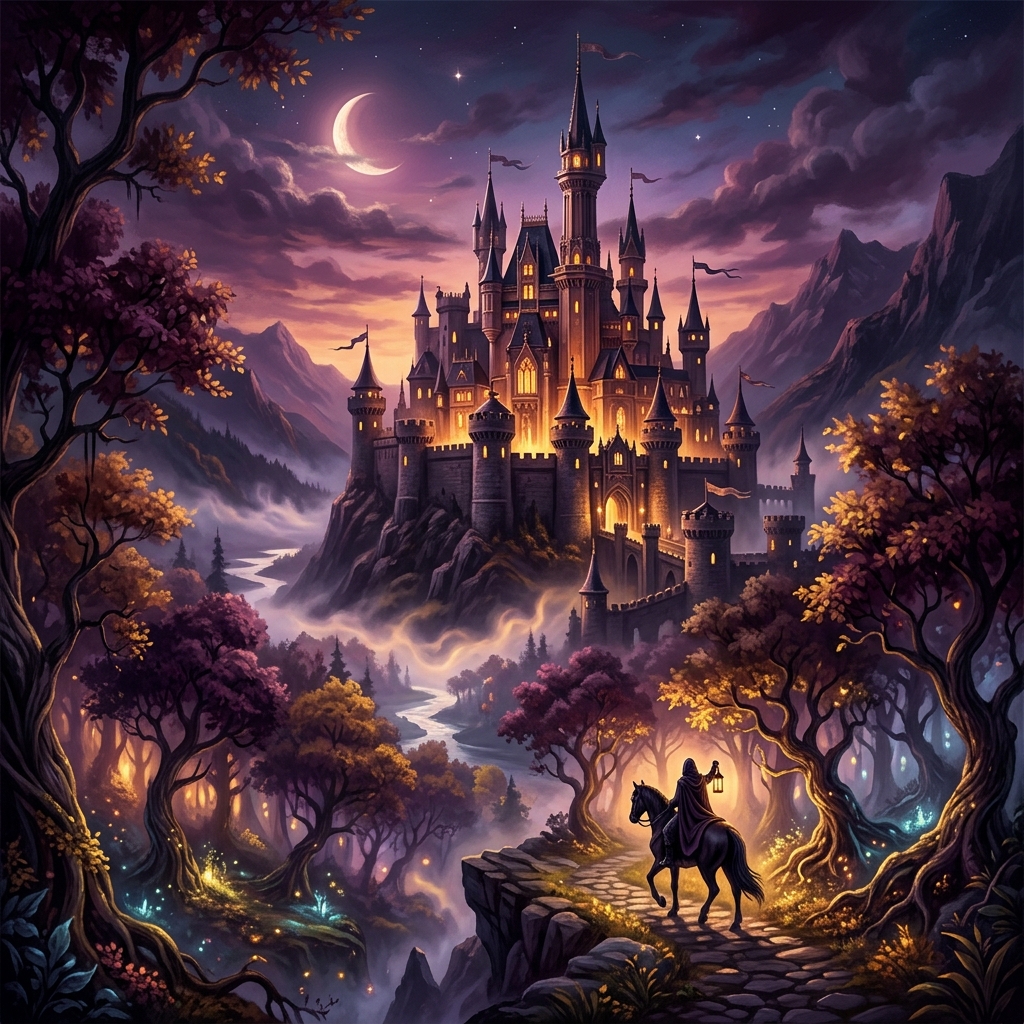
There is a moment in every great romantic fantasy where the world holds its breath. The sword is drawn. The spell is cast. And two people who were never supposed to fall in love find themselves standing at the edge of forever.
This is the genre that refuses to apologise for its grandeur. Where epic battles share the page with whispered confessions beneath enchanted skies. Where the stakes are not merely political or magical — they are deeply, achingly personal.
The Architecture of Longing
What separates romantic fantasy from its literary cousins is its refusal to treat love as a subplot. Here, the romance is the architecture upon which entire kingdoms rise and fall. Consider the works that have defined the last decade: stories where the fate of a realm hinges not on a chosen one’s sword arm, but on the courage to be vulnerable in a world that punishes softness.
The best romantic fantasy authors understand that a love story gains its power from resistance. From the slow, excruciating burn of two people orbiting each other like twin stars, each gravitational pull making the inevitable collision more devastating.
The Reader’s Covenant
We return to these stories because they offer us something the mundane world cannot: the promise that love is not merely an emotion, but a force of nature. That it can topple empires, break curses, and rewrite the very laws of magic.
In the pages of a romantic fantasy, we are given permission to believe in the impossible. Not merely in dragons and dark sorcery, but in the radical idea that two people can save each other — and in doing so, save everything.
The genre is no longer a whispered secret shared between readers in quiet corners of bookshops. It has become a literary movement, a cultural force, a declaration that stories about love deserve the same reverence as stories about war.
And perhaps that is the greatest enchantment of all.