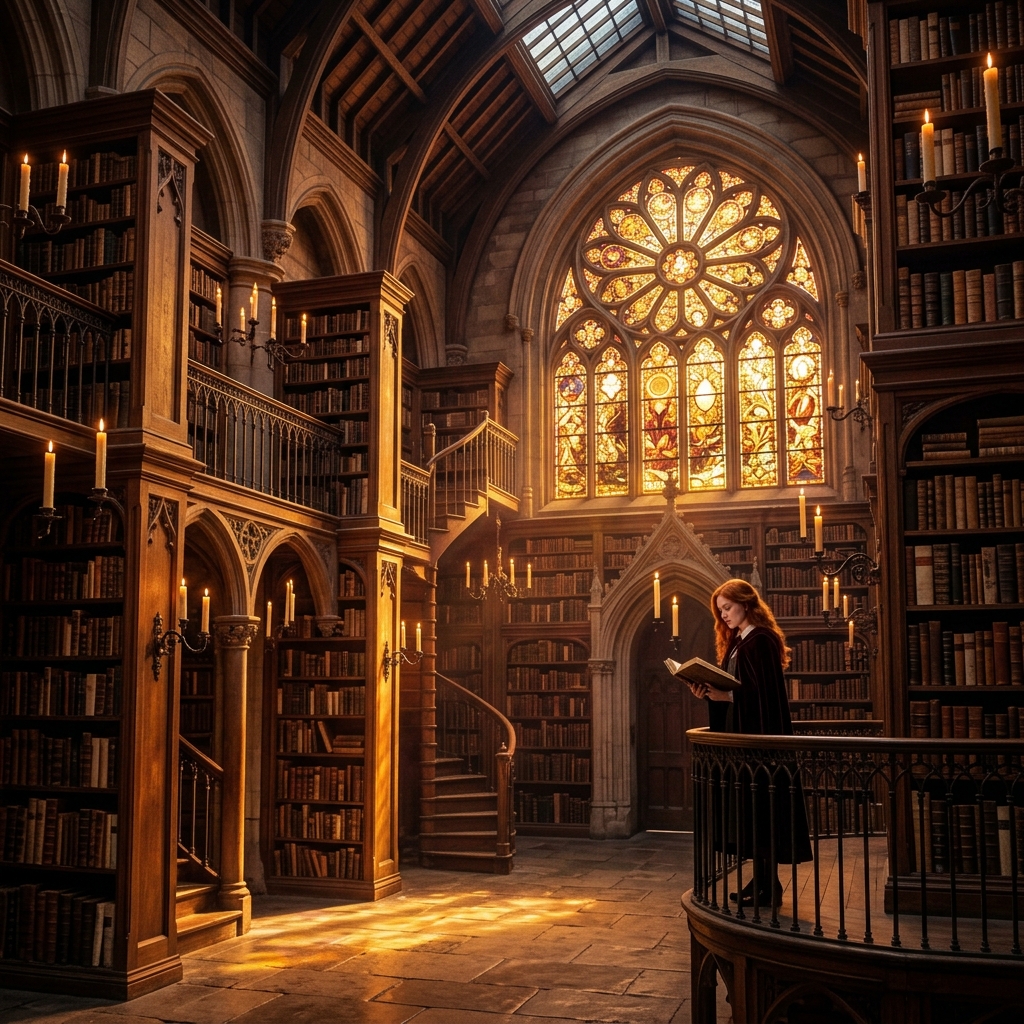
Some books arrive quietly. They slip onto shelves, gather dust, and wait for the right reader to find them. A Court of Thorns and Roses was not one of those books. It arrived like a storm — sudden, all-consuming, and impossible to ignore.
The Beauty and the Beast, Reimagined
At its core, ACOTAR is a retelling. But to call it merely that would be like calling a cathedral merely a building. Maas takes the bones of a familiar fairy tale and constructs something architecturally stunning — a world of faerie courts and ancient magic, where a mortal huntress named Feyre is dragged into a realm she was raised to fear.
The worldbuilding is meticulous without being exhausting. Each court — Spring, Summer, Autumn, Winter, Night, Dawn, Day — feels distinct, with its own culture, aesthetics, and political machinations. The Night Court, in particular, has become one of the most iconic fictional settings in modern fantasy.
The Romance That Redefined the Genre
But let us address the element that made this series a cultural phenomenon: the romance. Maas writes desire the way other authors write battle sequences — with precision, escalation, and devastating payoffs. The slow-burn tension between Feyre and the High Lord of the Night Court is a masterclass in romantic pacing.
What elevates it beyond mere chemistry is the emotional depth. These are characters scarred by trauma, shaped by loss, and terrified of the very thing they crave. Their love story is not a fairy tale escape — it is a reckoning.
The Verdict
ACOTAR is not a perfect book. Its pacing stumbles in places, and some secondary characters feel underdeveloped. But it accomplishes something rare and precious: it makes you feel. It makes you ache and rage and hope with an intensity that lingers long after the final page.
Rating: ★★★★½
A triumph of romantic fantasy that earns every tear and every sigh. Essential reading for anyone who believes love stories deserve to be epic.