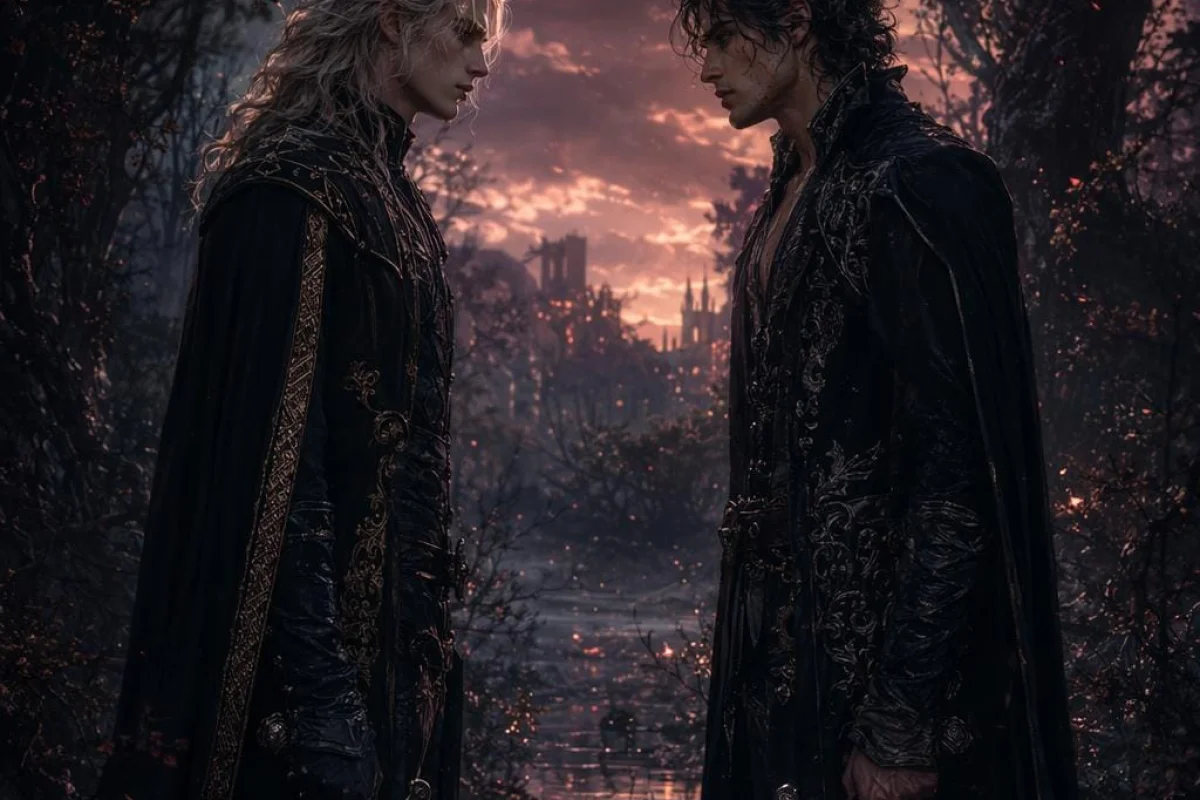
Look, we need to talk about enemies-to-lovers. Not the watered-down version where two people bicker for three chapters and then make out. I mean the REAL thing—the kind where two people understand each other on a bone-deep, terrifying level and absolutely hate that they do. The kind where the hatred isn’t born from ignorance or some silly misunderstanding. It’s born from recognition.
You know the feeling. That moment when you realize your sworn enemy—this impossible, infuriating person on the other side of the battlefield—sees you more clearly than anyone on your own side ever has. THAT is the architecture of this trope. That’s why we keep coming back to it, book after book, and that’s why it absolutely wrecks us when it finally breaks open.
The Gravity of the Grudge: Building the Foundation
Here’s the thing about a GREAT enemies-to-lovers story: it lives or dies by its foundation. The opposition has to feel insurmountable. We’re not talking about a personality clash or someone stealing someone else’s parking spot. We’re talking clashing ideologies, opposing moral frameworks, survival instincts that put these two people on a direct collision course.
When your characters stand on opposite sides of a brutal war, a generational blood feud, or a massive magical divide, every single interaction crackles. The “enemies” phase isn’t filler—it’s the friction that generates heat neither character can eventually ignore.
And modern romantasy is getting SO much better at this. The best authors in the genre aren’t doing “hate at first sight” anymore. They’re crafting enemies who share a profound, painful understanding of each other—two sides of the same tarnished coin, separated by birth, by crowns, by trauma. That’s infinitely more interesting than simple malice, and it leads to a far more devastating love story.
The Vulnerability of the Truce: Where the Armor Cracks
Okay, but the REAL magic? It happens during the truce. That fragile middle ground where the blade is lowered but the heart stays armored. This is the agonizingly slow phase where proximity forces observation, and observation forces realization. (This is also the phase where you, the reader, are screaming into a pillow at 2 AM.)
It’s the moment a character realizes their enemy isn’t a monster—they’re a mirror. And honestly? That’s MORE terrifying than death. Death is simple. Being truly known by the person sworn to destroy you? That’s psychologically dismantling. It requires tearing down every wall they built to survive.
The narrative shift from “I will destroy you and salt the earth” to “I’m the only one who truly knows you, and I will burn the world to keep you safe”—that’s the ENTIRE arc. Done well, it earns every single one of those four hundred pages. Done poorly… well, you’ve thrown those books too.
The Danger of the “Easy” Turn
This is where so many writers fumble it. The pivot from hate to love has to be EARNED. If the animosity evaporates because two characters shared a horse or huddled for warmth one time, the enmity was never real. It was just a thin costume draped over unacknowledged attraction.
True enemies-to-lovers requires characters who actively FIGHT the pull. They resent the vulnerability. They’re furious at themselves for noticing the exact shade of the other person’s eyes, or the way their voice drops when they’re exhausted. The emotional betrayal they feel toward their own cause—toward their own survival instincts—has to sit heavy on the page. You should feel that weight as a reader. It should make you uncomfortable in the best possible way.
Why We Stay for the Burn
So why do we devour this trope like it’s our job? (Some of us have literally made it our job, no judgment.) Because enemies-to-lovers promises a love tested under the most extreme conditions imaginable.
Think about it: if a relationship can survive a battlefield, a betrayal, a siege, or a fundamental disagreement about how the universe works, you TRUST that it can survive anything. It’s the ultimate proof of concept for a romantic bond. The best enemies force the protagonist—and you, the reader—to excavate themselves, to become sharper and truer, even while fighting the transformation every step of the way.
That’s not just a romance trope. That’s a philosophy of intimacy. It argues that real love isn’t found in comfortable agreement—it’s forged in profound challenge. And if that doesn’t make you want to immediately reread your favorite enemies-to-lovers book, I don’t know what will.
Your Assignment: The Involuntary Observation
Want to master this trope? You need to master the involuntary observation. Look, about hating someone: you watch them CLOSELY. You’re cataloging weaknesses, looking for cracks. But watching someone closely is also—inconveniently—the first step to loving them.
The Constraint: Write a 300-word scene where your protagonist and their enemy are forced into proximity (a war council, a stakeout, a formal ball). The protagonist notices a specific physical detail that betrays a vulnerability the enemy is trying to hide—a nervous tell, a poorly healed injury, a moment of deep exhaustion. Your protagonist notices it, understands exactly what it means, and then feels FURIOUS with themselves for understanding.
Give us the friction of unwanted empathy. Drop your scenes in the comments below, and let’s dissect the tension together.
See also: Slow Burn Mastery · Morally Grey Villain
Further reading:
- Best Enemies to Lovers Fantasy Romance
- Morally Grey Love Interest Fantasy Books
- Slow Burn Fantasy Romance Recommendations
External resource: TV Tropes: Enemies to Lovers
And if enemies-to-lovers is how the romance starts, found family is often how the world around it solidifies — the trope that makes the love story possible by proving the love interest is worth trusting.
Enjoyed this essay?
Vellichor is free for everyone. If this essay was worth your time, consider supporting us.
Enjoying this?
Vellichor is free and ad-free. If you enjoy our essays, consider supporting us with a one-time contribution.
Support Vellichor →